Will AI replace SEO? No, but the version of SEO that meant “rank a page number one and the traffic shows up” is already breaking, and pretending otherwise will cost you.
AI is changing what getting found means. This piece covers what’s breaking, what still works, and where to put your effort now.

What’s actually breaking is the click
The thing people are reacting to is real. The click is disappearing.
In the first four months of 2026, 68.01% of US Google searches ended without a click, according to Rand Fishkin’s analysis of Similarweb’s US panel data at SparkToro. People get their answer inside the results page, or inside an AI Overview, and never visit a site to get it.
That breaks the old promise of SEO. Ranking first used to mean traffic. Now you can hold the top organic spot and watch an AI Overview answer the question above you, so the searcher never scrolls to your link.
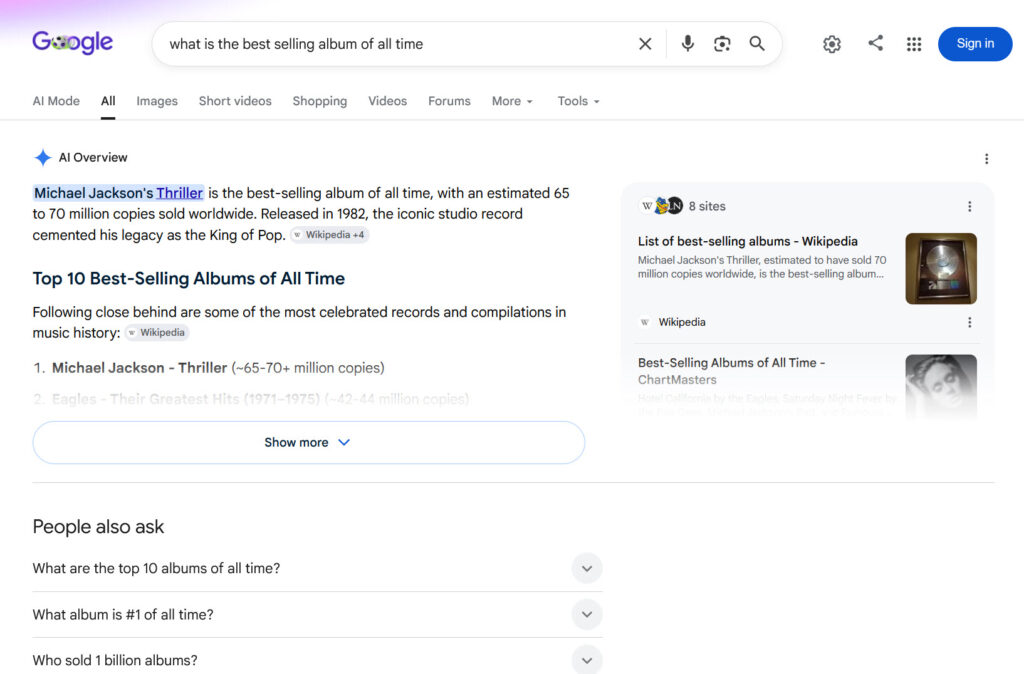
So when someone asks whether AI is killing SEO, this is what they’re really pointing at: it’s killing one specific thing, the assumption that a ranking automatically becomes a visit.
SEO is moving up a layer
Here’s the part the “SEO is dead” crowd skips. Those AI answers have to come from somewhere.
An AI Overview, a ChatGPT reply, a Perplexity summary: each one is built from sources it pulled off the web. Someone has to create that content, and it still has to rank well enough to get retrieved. Strong SEO is how you become one of those sources.
How much AI answers overlap with Google rankings
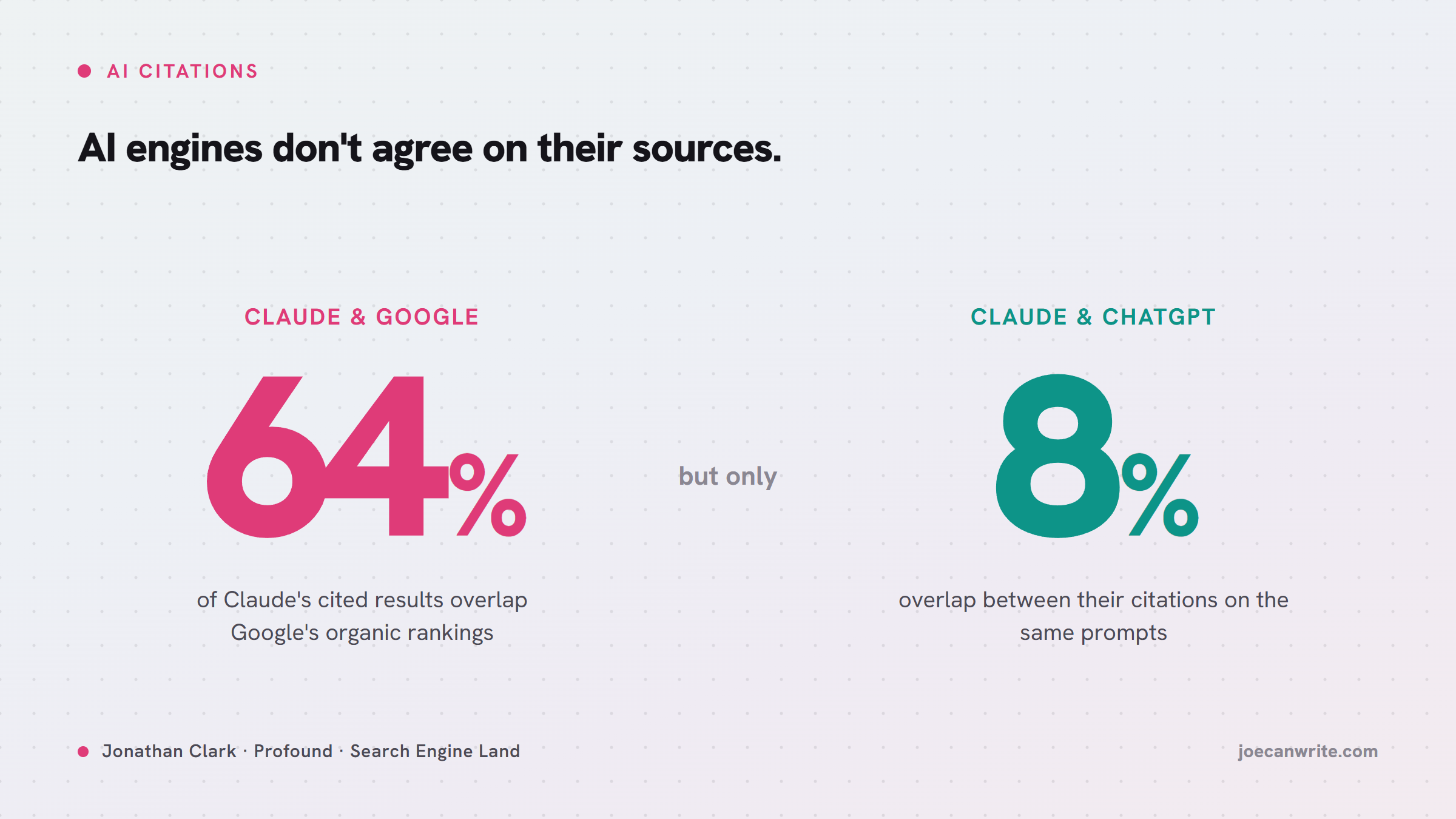
The overlap is measurable. Jonathan Clark of Moving Traffic Media analyzed Profound’s Zero Click data and found that when Claude pulls from the web, its cited results overlap 64% with Google’s organic rankings, as reported by Search Engine Land. Claude only runs a web search on 36.6% of prompts, but when it does, strong Google rankings put you in the running to be cited. The fundamentals carry over.
I heard this framed neatly at Create With 2026 recently. Tanya Van Gastel, who founded Rankingonai.com, an AI search and SEO agency for high-growth SaaS, put it simply on stage: “good AEO is good SEO.” The work that earns Google rankings is the same work that gets you cited by AI.
The work moves up a layer, from earning the click to being the source the answer is built on.
Those AI answers have to come from somewhere.
What the job actually becomes
The job also gets wider, because you’re no longer working to win a single results page.
You’re trying to get found across Google, AI Overviews, ChatGPT, Perplexity, and Claude, and those systems don’t always agree with each other. In the same analysis, Claude’s citations overlapped with ChatGPT’s only 8% of the time on identical prompts, according to Clark. So “AI search” is really several audiences at once. What earns a citation in ChatGPT is a different job from what earns one in Claude.
That reshapes the work into three jobs:
- Be a source AI can quote: AI freely summarizes generic how-to content without crediting anyone. Original work built on first-hand testing and real data, the kind it can’t reproduce on its own, gets cited far more often. That citation gap is the whole argument in AI content automation: where it works, and where it makes slop.
- Build recognized authority: AI systems rely on sources they can identify and trust. Consistent expertise published under a real name, with a coherent identity, makes you a safer source to cite.
- Make every visit count: clicks are scarcer, so each one matters more. Content that ranks but never moves the reader to act wastes a harder-won visit than it used to.
None of that is automatable. The skills that survive are judgment and genuine expertise, the things a model can’t generate on its own. That work was always valuable.
Where to put your effort now
If you do SEO, or pay someone to do it, focus your 2026 effort on five things:
- Write from real experience: publish things a model can’t reproduce from training data, like your own results and tests.
- Structure for direct answers: ask the question, then answer it plainly and near the top. Don’t hide it inside a tab or an accordion.
- Build your authority: publish consistently under your own name so AI systems learn who you are and what you know.
- Track AI visibility: watch how often you show up in AI Overviews and where AI-referred traffic lands, alongside your ranking positions.
- Make the page convert: treat every visit as precious, because it now is.
For the hands-on version of this, see how to use AI for SEO without tanking your rankings. For the bigger picture, start with AI content strategy that ranks.
Will AI replace SEO? Only the low-value parts
For everything else, AI raised the bar. Original work from a credible source still gets found and cited, and content that was only ever filler stopped getting rewarded.
If you were already doing the real work, writing from experience, and answering questions properly, this change works in your favor. If your SEO was thin content built to catch a keyword, that’s the category that stopped working, and it’s the same pattern behind what actually gets penalized.
The first move is a ten-prompt citation check. Write down the ten questions your buyers actually ask, run each one through the major AI assistants, and log whether you get cited or recommended in the answers. The log shows where you already appear and where competitors appear instead, and it gives you a baseline to re-run in a few months.
Want content that gets found and gets results? I’m Joe Fylan, a content strategist and writer for WordPress, SaaS, and eCommerce companies. If this is the kind of thinking you want behind your content, tell me about your project.
FAQs
Is SEO dead?
No. The zero-click change is real: 68.01% of US Google searches ended without a click in early 2026, per SparkToro. But the work has moved from earning the click to becoming the source AI answers are built on, and the fundamentals still apply.
Will AI replace SEO jobs?
It replaces the low-value parts: bulk keyword pages and thin filler. It raises demand for judgment, original research, and content strategy, the parts a model can’t do alone. The role survives with a different mix of work.
Should I still write blog posts in 2026?
Yes, if they say something a model can’t generate on its own. Original data and first-hand experience get cited by AI and read by humans. Generic how-to posts that restate the consensus are the vulnerable category.
Does ranking on Google still matter for AI search?
Yes. When Claude pulls from the web, its cited results overlap 64% with Google’s organic rankings, per Jonathan Clark’s analysis of Profound data. Strong Google positions still line up closely with what AI cites, so ranking well remains one of the best ways to be in the running.
What’s the difference between SEO and AEO?
SEO gets your page ranking in search results. AEO (answer engine optimization) gets your content used inside AI-generated answers. They overlap heavily, but you now need both.